
🌿 Wildlife-Friendly Gardens: How Metal Planters Can Support Pollinators and Native Plants
- Oct 20, 2025
- 3 min read
Modern wildlife-friendly garden design — clean lines, natural planting, and durable metal planters.

Modern Gardens that Give Back to Nature
Great garden design no longer ends at aesthetics. Today, a truly modern outdoor space is one that gives back to nature while offering a calm, contemporary feel. Creating wildlife-friendly garden planters allows small spaces to support pollinators. Even the smallest courtyard or balcony can become a haven for bees, butterflies and other pollinators when planted with intention.
Wildlife-friendly gardens prove that sustainability and style can coexist. A few well-placed planters filled with nectar-rich flowers will invite life back into your garden, creating movement, colour and gentle sound — the essence of a thriving ecosystem. With their strong architectural form and long life, metal planters are the perfect foundation for this new generation of design-led, eco-friendly spaces.
Why Pollinators Matter in Urban Gardens
Pollinators are the quiet workforce of the natural world. They’re responsible for helping more than 75% of flowering plants reproduce — including many that feed us. In towns and cities, green space is limited, but planters bridge the gap between built environments and nature. A single trough of flowering plants can provide food and shelter for dozens of insects.
Every planter you fill with pollinator-friendly plants becomes a micro-habitat — a tiny sanctuary that contributes to wider biodiversity.Group several together, and you’ve created a wildlife corridor: a route for bees and butterflies through otherwise hard urban spaces.
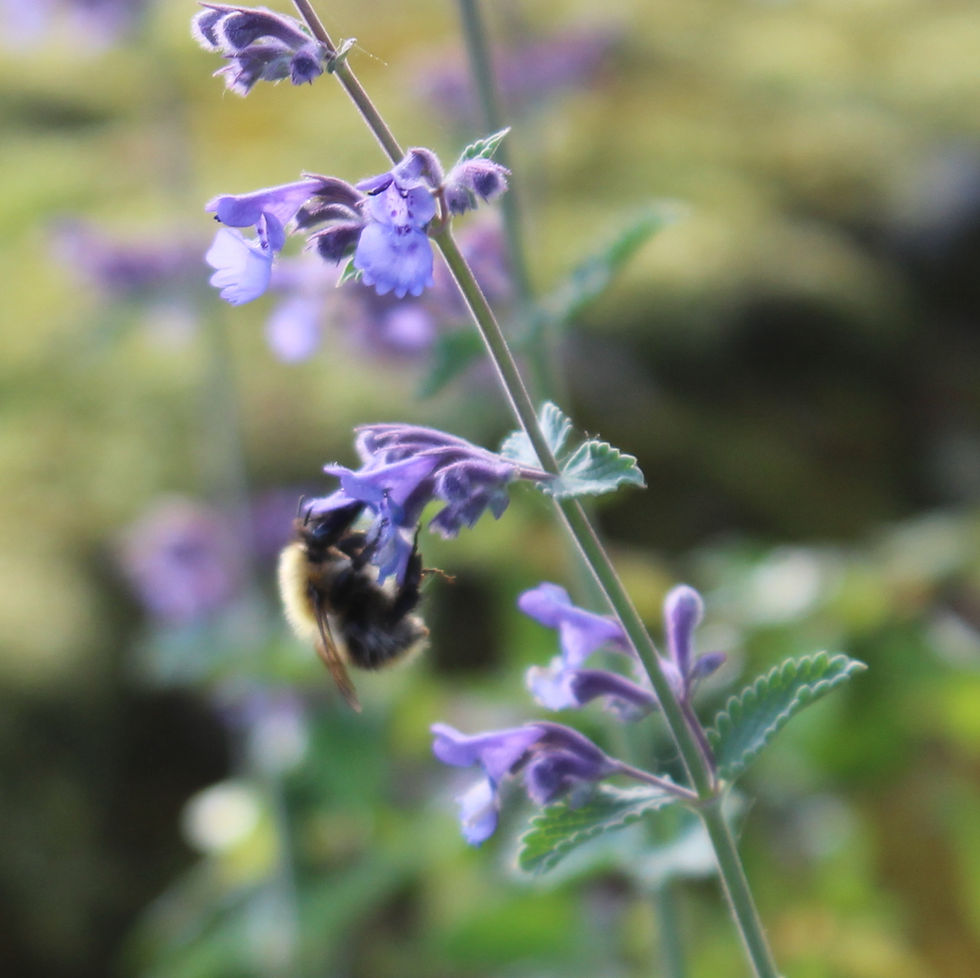
The Best Plants for Pollinator-Friendly Planters
When you’re planting for wildlife, variety is key. Choose a mix of flowers that bloom at different times, and layer textures to attract a wider range of pollinators.
For sunny positions: Lavender, salvia, verbena bonariensis, thyme and sedum thrive in warm planters. They provide long-lasting flowers and nectar from early summer through autumn.
For partial shade: Heuchera, campanula and hardy geraniums offer softer foliage and colour where light is limited.
For texture and movement: Ornamental grasses such as Stipa tenuissima or Carex pair beautifully with flowering perennials, creating natural motion that encourages insects to explore.
Use a good free-draining compost and raise planters slightly off the ground to prevent waterlogging. Healthy roots support healthy ecosystems — below and above the soil.
For more on drainage, see our guide: The Importance of Drainage Holes and Aggregates.)

Choosing the Right Planters for a Wildlife Garden
While timber and terracotta have their charm, metal planters offer something uniquely suited to sustainable modern gardens: structure, longevity and flexibility. Powder-coated steel retains warmth without overheating, allowing pollinator plants to flourish. The material is fully recyclable, low-maintenance and available in almost any colour.
Rectangular planters are ideal for defining borders or separating zones, while cubes and columns add vertical variety. Mixing heights gives insects more shelter and feeding options — and visually balances “wild” planting with clean modern design.
A good planter doesn’t just hold plants — it shapes how life thrives within it.

Design Tips: Blending Structure and Softness
The most beautiful wildlife gardens balance geometry with spontaneity. Pair crisp, architectural planters with relaxed planting — lavender spilling gently over the edge, grasses moving in the wind, wildflowers weaving through perennials.
For a contemporary look, group planters along timber decking or beside seating areas. The straight lines anchor the space while the planting softens it, inviting people and wildlife alike. Don’t worry about a few gaps or self-seeders; that’s how a garden shows life.

From One Planter to a Wildlife Corridor
You don’t need acres to make an impact. Start with one wildlife-friendly planter and see how quickly life returns — bees resting on salvia stems, butterflies dancing over verbena. As neighbours and friends add their own, a single garden can become part of a larger network of mini-habitats across the community.
Every garden, no matter how small, can support nature. It begins with one planter.

Ready to create your own wildlife-friendly space?
Explore our range of bespoke metal planters, available in any RAL colour and built to your dimensions.
Each one is made in Britain to last for years — designed for gardens that work in harmony with the world around them.
