
How Much LECA Do I Need In A Planter?
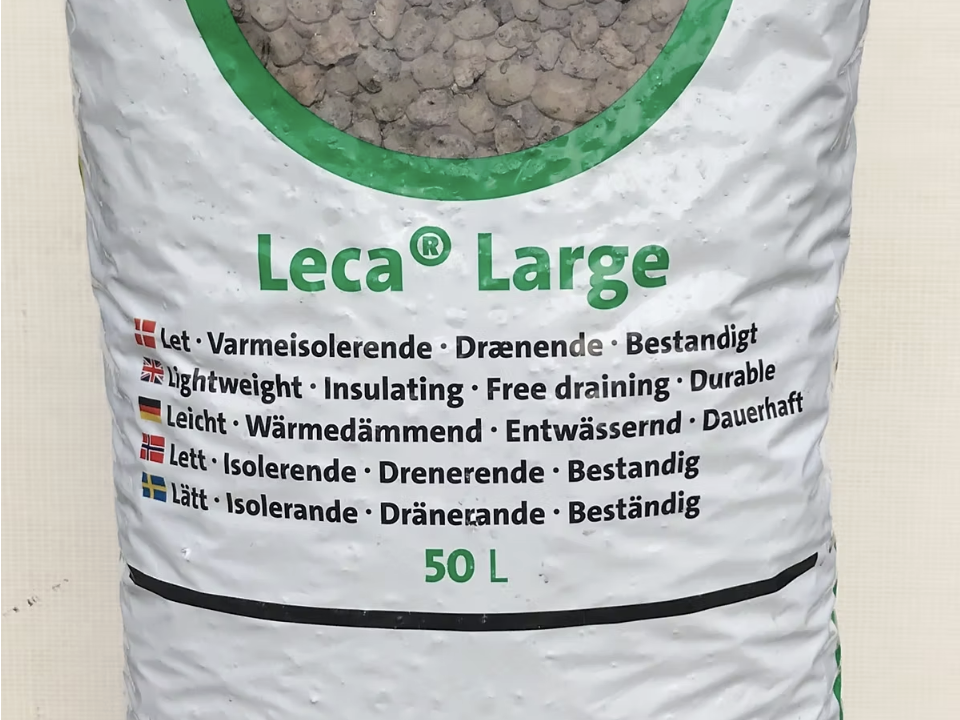
Most planters benefit from a drainage layer in the base. This creates a space below the soil where excess water can drain away before reaching the drainage holes, helping to prevent the soil from becoming waterlogged. A variety of materials can be used for this purpose, including gravel, shingle and LECA drainage aggregate.
Choosing A Drainage Material
Several materials can be used to create a drainage layer inside a planter. Gravel, pea shingle and LECA all perform broadly the same function by creating a free-draining layer beneath the soil. The choice usually comes down to weight, availability and convenience rather than drainage performance. For most planters, any of these materials will work perfectly well when used correctly.
Why We Use LECA Drainage Aggregate
We supply LECA because it provides the same drainage benefits as gravel whilst being significantly lighter. A 50 litre bag of LECA weighs approximately 12kg. Achieving a similar volume using gravel would typically require around three bags with a combined weight of approximately 75kg. In simple terms, LECA is around 4–5 times lighter than gravel. This makes it particularly useful for roof terraces, balconies, window boxes and other locations where weight may be a consideration. It is also easier to transport, carry and install than an equivalent volume of gravel.
Calculating The Correct Amount
We calculate LECA requirements using a standard 100mm drainage layer across the base of the planter. Whilst smaller planters may be able to use less, we have found 100mm to be a simple and effective approach across all planter sizes. When LECA is added through our quote builder, we calculate the exact volume required and supply that amount with the planter order. This means customers receive only what they need rather than having to purchase full bags and deal with unused material.
Custom Metal Planter Quote Builder
Our quote builder automatically calculates the amount of LECA required for each planter and allows you to add the exact quantity to your order.
Frequently Asked Questions:
Can LECA Be Reused?
Yes. LECA can often be reused if a planter is emptied and replanted. Using a geotextile membrane above and below the drainage layer helps keep the LECA clean and separate from the surrounding soil, making it easier to reuse in the future.
Why Not Just Fill The Entire Planter With Soil?
A drainage layer creates a space beneath the soil where excess water can drain away before reaching the drainage holes. Without this layer, the lowest part of the planter can remain wetter for longer periods, particularly during wet weather.
Does LECA Affect Soil Or Plant Growth?
No. LECA is an inert material, meaning it does not release anything into the soil or affect soil pH. Its role is simply to create a lightweight drainage layer beneath the planting soil.
Ready to design your planter?
Use our online quote builder to create a planter in your exact size and see pricing instantly.